

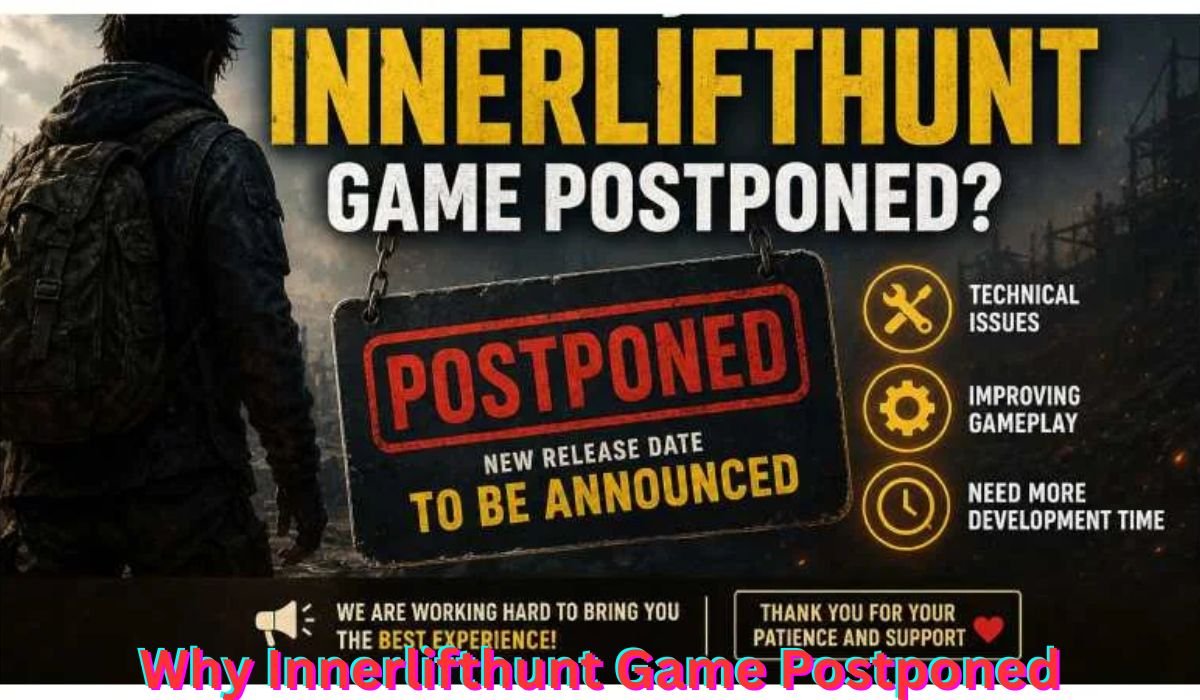
If you’ve been searching for answers about the Innerlifthunt game postponement, you’re not alone. Players worldwide are curious about what caused this delayed game release. The buzz around this title grew mostly through online discussions and search engine trends, making any delay feel bigger than it might actually be.
The truth is, most game development delays aren’t random. They happen because of real, behind-the-scenes challenges that players rarely see. Understanding those reasons helps set realistic release expectations instead of fueling speculation about what went wrong.
Understanding the Development Stage of Innerlifthunt
One major reason behind the Innerlifthunt delay is where the game stood in its development stage when it was first announced. Many titles get revealed during the concept stage or mid-development stage, creating a gap between what people expect and what’s actually ready to ship.
- Early announcement before core systems were finalized
- Gap between release window promises and actual readiness
- Unstable development cycles leading to internal timeline shifts
- Rushed previews creating unrealistic release expectations
| Development Phase | Status Risk | Impact on Launch |
| Concept Stage | Very High | Often causes major delays |
| Mid-Development | Moderate | Can push release window back |
| Late Development | Low | Minor polish delays only |
| Gold/Final Build | Minimal | Rare last-minute issues |
The development timeline was probably more ambitious than realistic. When game systems like graphics rendering, gameplay mechanics, artificial intelligence, and user interface integration aren’t fully stable, delaying becomes the smarter move over rushing a broken launch.
Technical Limitations and Performance Optimization

Performance optimization is one of the most common and time-consuming reasons behind any delayed game release. A game might run perfectly in a controlled lab but fall apart across different system configurations and hardware constraints in the real world.
- Inconsistent frame rates across different devices
- Slow loading time affecting user experience
- High memory consumption causing crashes
- Codebase instability requiring deep restructuring
| Technical Issue | Difficulty to Fix | Time Required |
| Frame Rate Drops | High | Weeks to months |
| Memory Leaks | Very High | Months |
| Loading Time Issues | Moderate | 2–6 weeks |
| UI Glitches | Low | Days to weeks |
Bug fixing is another layer that quietly eats up development time. Some bugs are surface-level, but others are buried deep in the codebase, requiring a full system redesign before the team can even begin long-term testing. Game stability doesn’t happen overnight; it’s earned through hundreds of test cycles.
Server Infrastructure and Online Stability
If Innerlifthunt includes any multiplayer functionality or cloud-based features, server infrastructure becomes one of the most critical pieces to get right. A weak server setup can destroy a game’s reputation on launch day, no matter how polished the gameplay feels.
- Poor connection stability frustrating players immediately
- Broken matchmaking systems ruining the online gaming experience
- Latency management failures causing lag and disconnections
- Data synchronization errors between players affecting fairness
Real-world testing under high traffic simulation is the only reliable way to confirm server readiness. Developers often discover technical limitations only when thousands of users connect simultaneously. The choice to delay rather than risk negative reviews and refund requests is a sign of responsible launch strategy, not failure.
| Server Challenge | Risk if Ignored | Solution Approach |
| High Traffic Load | Server crashes | Stress testing |
| Data Sync Errors | Game-breaking bugs | Architecture review |
| Latency Problems | Poor player experience | CDN optimization |
| Matchmaking Failures | Negative reviews | Algorithm rework |
Strategic and Market-Based Decisions
Not every delay comes from a technical problem. Sometimes, strategic choices around launch timing and market competition are the real driving force. The gaming market is crowded, and releasing at the wrong moment can bury even a great game.
- Avoiding clashes with major competitor game launch windows
- Finding the best release cycle for maximum game visibility
- Allowing time for proper marketing preparation
- Planning gameplay trailers and gameplay demonstrations strategically
Community engagement through social media campaigns takes time to build properly. A rushed rollout without solid marketing can limit reach and reduce long-term success. Choosing a smarter release planning window isn’t a weakness , it’s smart launch preparation that protects the game’s future.
Feature Completion and Quality Assurance
Modern players expect a smooth experience from day one. Unfinished systems, gameplay imbalance, or missing content can trigger instant backlash especially for a newer title without an established fanbase. Feature completion isn’t optional; it’s the foundation of a successful launch.
- Unfinished gameplay loops breaking player immersion
- Performance bugs reducing game quality noticeably
- Gameplay bugs causing frustrating in-game moments
- Incomplete user experience flows creating confusion
Quality assurance is a deeply detailed process. Testers go through every corner of the game hunting for performance bugs, gameplay bugs, and software integration failures. When issues pile up, game optimization requires going back to earlier stages, which naturally extends the development timeline and delays the final game launch.
Lack of Official Communication and Its Impact
One of the biggest frustrations for players isn’t the delay itself, it’s the silence around it. When developer updates go quiet, player trust starts to erode. The absence of official communication turns a manageable situation into a growing concern across the gaming community.
- No roadmap updates leaving players in the dark
- Player curiosity turning into player concern quickly
- Unverified claims spreading across online discussions
- Loss of player confidence due to communication gaps
Transparency doesn’t require sharing every internal detail. Even a brief update confirming that game development is ongoing can make a massive difference. Developer reputation is shaped not just by the final product but by how teams communicate during difficult development realities.
Player Expectations and Community Reaction
Every delay shifts how the gaming community feels about a title. Some players raise their expectations, assuming the extra time means a more polished game. Others lose interest after repeated silence. In the case of Innerlifthunt, it seems like a mix of player curiosity and genuine player concern.
- Higher bar for launch quality after a longer wait
- Risk of losing momentum without confirmed updates
- Community trust depending on developer responsiveness
- Player feedback shaping perception before and after launch
Community reaction is a powerful force. Handled well, it builds anticipation. Handled poorly, even a technically great game can struggle at launch. Managing expectations through honest official communication is one of the most underrated parts of release management.
Read Also This: Xendit Work GamificationSummit: Have You Seen This “Payment Magic”?
Future Outlook and Release Possibilities
The extra time from this game postponement could genuinely be a good thing. If the team uses it wisely fixing technical issues, improving game performance, and refining enjoyable gameplay the final product could be significantly better than what an early launch would have delivered.
- Refined experience possible with extended development time
- Better software stability reduces post-launch patch cycles
- Improved game optimization means smoother play across devices
- Stronger launch strategy increases long-term player retention
History has shown that a polished game can overcome a late arrival. A rushed game, however, rarely recovers its reputation. The smart move for players right now is to follow credible sources, avoid speculation, and wait for confirmed updates directly from the developers before drawing conclusions about release possibilities.
Frequently Asked Questions
Why Was The Release Shifted?
Fans still ask about the delay online. Many reports discuss Why Innerlifthunt Game Postponed because developers needed more testing time.
What Problems Did The Team Face?
Some players think bugs caused the late release. The topic Why Innerlifthunt Game Postponed became popular after technical issues were mentioned.
Did The Creators Announce A New Date?
Gamers are waiting for an official update now. Many gaming blogs explain Why Innerlifthunt Game Postponed and discuss possible launch windows.
Was The Game Incomplete Before Launch?
Players wanted a polished version without errors. That is why conversations about Why Innerlifthunt Game Postponed spread across gaming communities.
Are Fans Angry About The Delay?
Some fans felt disappointed after hearing the news. Still many people support Why Innerlifthunt Game Postponed if it improves gameplay quality.
Could New Features Cause The Delay?
Extra content may have increased development time. Several articles connect Why Innerlifthunt Game Postponed with new missions and better graphics.
Will The Delay Improve The Final Game?
Many gamers hope the wait will be worth it. People searching Why Innerlifthunt Game Postponed expect smoother performance after the postponement.
Conclusion
The Innerlifthunt game postponement is most likely the result of overlapping technical problems, developmental changes, and strategic choices, not a single failure. Whether it’s performance optimization, server infrastructure, or feature completion, delays of this nature almost always signal a team trying to do better, not giving up.
As a player, the best approach is patience paired with realistic release expectations. Follow credible sources, avoid getting caught up in speculation, and trust that a refined experience is worth waiting for. A polished game delivered late will always outlast a rushed game delivered on time.
