

URLs are the silent backbone of every website you visit. One broken link can destroy user trust in seconds. A proper URL Encoder SpellMistake Fix and Guide helps developers, marketers, and SEO professionals avoid costly errors that tank SEO rankings, break API calls, and send visitors to a dreaded 404 page.
Understanding URL encoding isn’t optional anymore, it’s essential. Whether you’re building campaign URLs, sharing affiliate links, or setting up redirects, encoding errors follow you everywhere. This guide breaks everything down in plain language so you can spot, fix, and prevent mistakes before they cause real damage.
What Is a URL Encoder Spell Mistake?
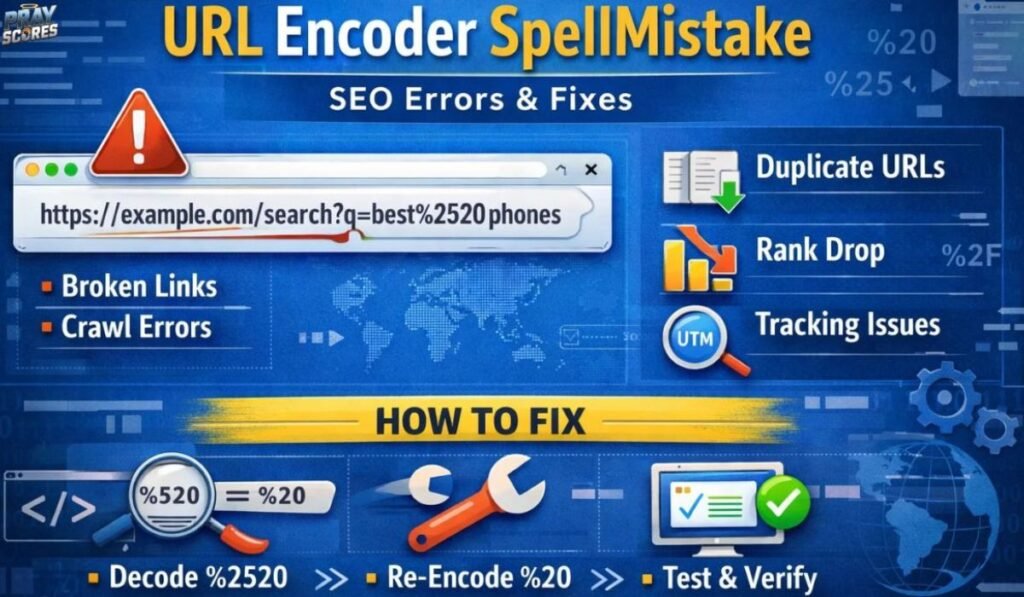
A URL encoder spell mistake happens when special characters don’t get converted into a URL-safe format properly. Raw spaces, symbols, and accented letters can’t travel safely through a browser without being wrapped in percent encoding in URLs first.
Think of it like packing fragile goods for shipping, skipping the wrapping and things break in transit. These mistakes aren’t just a developer problem. Marketers, content writers, and SEO professionals all create URLs daily, and URL syntax mistakes sneak in constantly without proper validation habits or tools in place.
Common URL Encoder Spell Mistake Types:
- Unencoded space raw space inside a URL string breaks the request instantly
- Double encoding turning %20 into %2520 corrupts the parameter completely
- Invalid percent code like %2G, which contains a non-hexadecimal character
- Missing encoding causes wrong query parsing on the server side
| Error Type | Example | Result |
| Unencoded space | q=url encoder | Broken request |
| Double encoding | %2520 instead of %20 | Corrupted parameter |
| Missing encoding | name=John&Smith | Wrong query parsing |
| Invalid percent code | %2G | Invalid character |
Importance of Correct URL Encoding in Web Systems
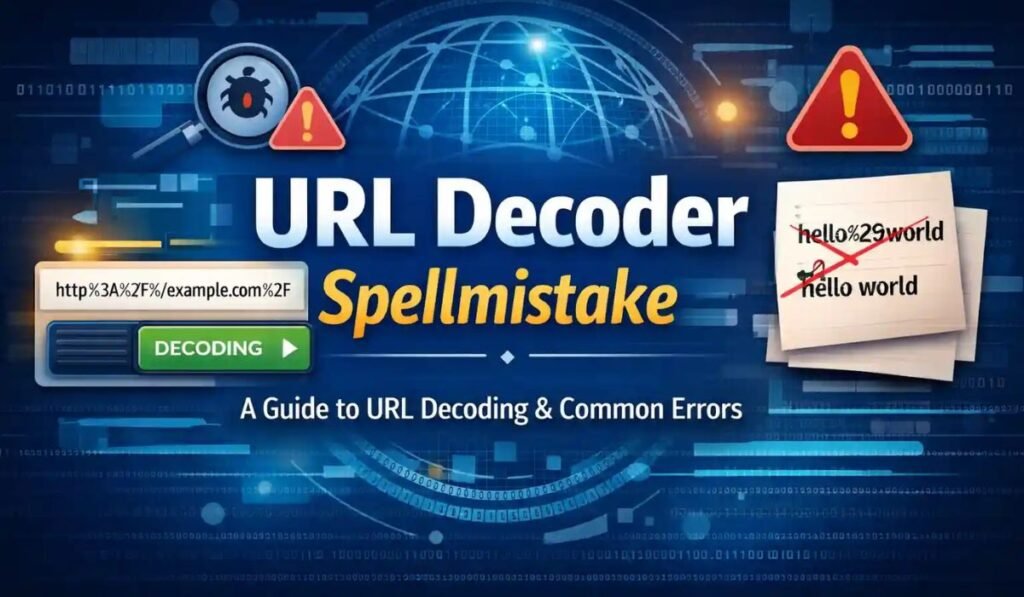
Every browser request reads your URL one character at a time. A single malformed URL request causes the server to either reject it entirely or misread it and most users don’t give you a second chance. That means lost traffic, lost revenue, and a weakened brand reputation across competitive markets.
SEO-friendly URLs are critical for crawling and indexation. Google crawlers and Googlebot rely on clean URL structure guidelines to index your pages correctly. Beyond that, payment processors, authentication systems, and third-party integrations all depend on safe URL transmission; one API URL encoding error can crash a login flow or corrupt user data entirely.
Why Correct Encoding Matters:
- Protects SEO rankings from crawl errors caused by URL syntax mistakes
- Ensures safe URL transmission across every web system
- Prevents failed API calls from breaking backend systems
- Supports browser requests being read cleanly by every server
- Keeps authentication systems and payment processors functioning reliably
| Risk Area | Impact of Wrong Encoding |
| SEO performance | Pages skipped by Googlebot |
| API calls | Transaction failures and errors |
| User experience | 404 page and abandoned sessions |
| Link reliability | Broken links across site |
Common Causes of URL Encoder Spell Mistakes
Raw user input pasted directly into a URL string is the biggest troublemaker. Users typing into search pages and contact forms include hashtags, ampersands, and spaces without thinking and if your system doesn’t encode that input automatically, things break fast.
URL decoding and URL encoding often get confused with each other. Mix them up and you’ll either double URL encoding a value or expose raw characters that should be safely wrapped. Manual find-and-replace on encoded strings is another recipe for disaster: one wrong character collapses the entire URL anatomy.
Top Causes to Watch:
- Raw user input passed directly into URLs without sanitization
- Copy-paste from Word or email adding invisible formatting characters
- Confusing URL encoding with URL decoding and reversing the operation
- Double URL encoding turning %20 into %2520 silently
- Hand-editing encoded strings and breaking query string structure
How URL Encoding Works in Simple Terms
HTTP URL encoding follows one rule: replace every unsafe character with a percent sign and two hexadecimal digits derived from the character’s ASCII value. That’s it. No complex logic, just a universal conversion table every browser and server on the planet understands and agrees on.
Reserved characters like query strings starters, ampersands, and page fragments markers must be encoded when they appear inside values rather than structuring the URL. Skip that and the browser misreads your entire URL structure, triggering URL escape character errors that are surprisingly painful to trace without the right tools.
Quick Encoding Reference:
| Character | Encoded Form | Purpose |
| Space | %20 | Replaces blank space |
| & | %26 | Escapes ampersands in values |
| = | %3D | Escapes equals sign |
| # | %23 | Escapes page fragments symbol |
| é | %C3%A9 | International character encoding |
Key Encoding Concepts:
- Every character maps to a fixed hexadecimal digits code based on ASCII value
- Web address formatting stays consistent across all browsers worldwide
- Reserved characters must be encoded inside parameter values only
- URL-safe transmission depends on this conversion happening without exception
How to Identify URL Encoder Spell Mistakes
Spotting trouble early saves enormous debugging time. Garbled characters in your browser address bar things like %25 or %2525 are the first warning sign. If your URL looks strange visually, your URL parser is already struggling to read it cleanly across different browser handling differences.
Browser DevTools is your sharpest weapon here. Open the Network tab and inspect the raw request your app sends. Compare it to what you intended: the gap tells you exactly where the URL syntax mistakes live. Google Search Console, Screaming Frog, Postman, and Ahrefs Site Audit each catch different layers of encoding failures across your site.
Red Flags to Watch For:
- Pages returning 400 Bad Request or 404 Not Found errors
- Query string encoding issues returning empty or wrong results
- API calls failing with vague error messages
- Redirect chains looping or behaving unpredictably
- SEO tools flagging broken links in crawl reports
| Tool | What It Catches |
| Google Search Console | Crawl errors and broken URLs |
| Screaming Frog | Site-wide URL syntax mistakes |
| Postman | API request encoding failures |
| Browser DevTools | Network tab raw request inspection |
| Ahrefs Site Audit | Broken links and redirect issues |
Step by Step Process to Fix URL Encoder Spell Mistakes
Fixing encoded URL problems isn’t guesswork, it’s a clean, repeatable process. Start by isolating the broken URL using server logs or the Network tab in Browser DevTools. Compare it side by side against a working version. The difference between the two almost always jumps out immediately without deep digging.
Never attempt fixing a URL while it’s still in its encoded state. Use a reliable URL decoder to convert it back into readable text first. This exposes the full URL structure with clarity. Then re-encode correctly using built-in encoding functions, never manual character swapping and test across Chrome, Firefox, and Safari before production deployment.
Fix Process Step by Step:
- Step 1 Isolate the broken URL using Browser DevTools or server logs
- Step 2 Decode using a URL decoder to get readable text
- Step 3 Diagnose: look for unencoded space, double encoding, or broken query parameters
- Step 4 Re-encode using built-in encoding functions like encodeURIComponent()
- Step 5 Test across Chrome, Firefox, and Safari for browser compatibility
- Step 6 Monitor with 4xx error alerts after production deployment
Examples of URL Encoding Mistakes and Fixes
Real examples make abstract ideas click instantly. An unencoded space like q=url encoder breaks the browser request immediately; the fix is simply q=url%20encoder. A broken ampersand inside a value like name=John&Smith causes wrong query parsing, encodes it as name=John%26Smith and the problem disappears completely.
A real-world eCommerce site in Dallas saw a 15% drop in checkout completions. Investigation revealed cart URLs contained unencoded ampersands inside product names, causing query string encoding issues that dropped cart items silently. One encodeURIComponent() fix restored everything within 48 hours preventing thousands in lost revenue with a single function call.
Common Mistakes and Fixes:
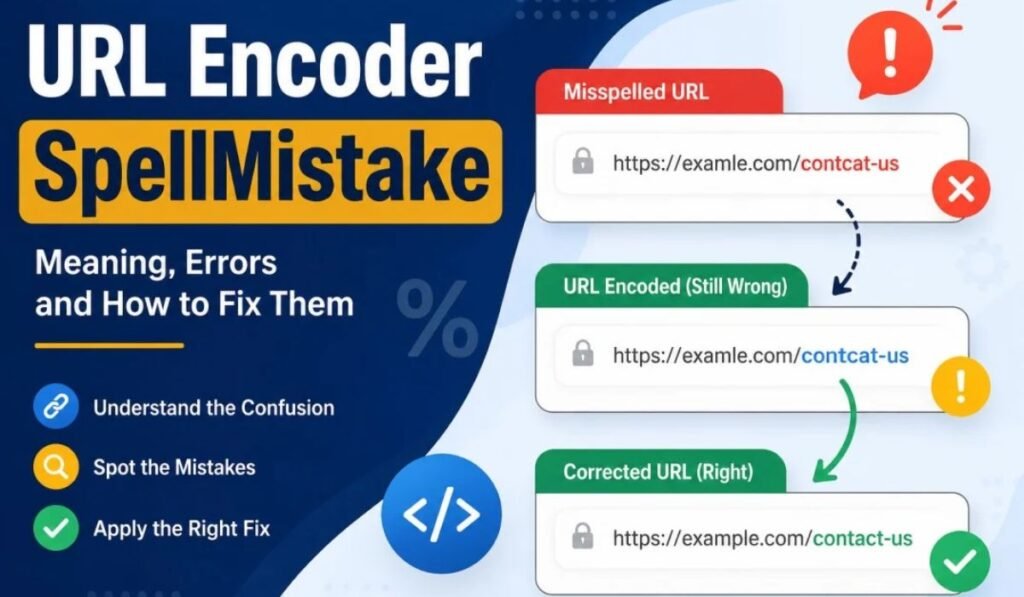
- ❌ https://example.com/search?q=url encoder → ✅ q=url%20encoder
- ❌ https://example.com/?name=John&Smith → ✅ name=John%26Smith
- ❌ https://example.com/path%2520to%2520page → ✅ path%20to%20page
- ❌ https://example.com/café → ✅ caf%C3%A9 (international character encoding)
Read Also This: Webpayblog com The Future of Digital Payments, Fintech Security & Online Transactions
Technical Explanation of Encoding in Web Development
URL encoding in JavaScript gives you two distinct tools. Use encodeURI() for complete URLs and encodeURIComponent() for individual parameter values. Mixing them up is one of the most common browser URL parsing errors in frontend development; the wrong function leaves unsafe characters exposed inside your query strings without warning.
Python handles encoding through the urllib library cleanly using urllib.parse.quote() for path and query encoding. PHP offers urlencode() for query string values and rawurlencode() for path segments; they aren’t interchangeable. Java uses URLEncoder.encode() for form data encoding. Always rely on built-in encoding functions and validate inside your CI/CD pipeline to catch issues before production environment deployment.
Language Encoding Reference:
| Language | Function | Use Case |
| JavaScript | encodeURIComponent() | Parameter values |
| Python | urllib.parse.quote() | Path and query encoding |
| PHP | urlencode() | Query string values |
| Java | URLEncoder.encode() | Form data encoding |
Best Practices for Long-Term URL Integrity:
- Always use built-in encoding functions never manual find-and-replace
- Encode once only double URL encoding silently destroys URL integrity
- Validate URLs automatically inside your CI/CD pipeline
- Train content writers and marketers they build URLs too
- Run monthly URL integrity audits with Screaming Frog or Sitebulb on large sites
Frequently Asked Questions
How do I fix URL encoding errors on my site
Fix encoding issues quickly when URLs break in browser searches often occur. Use URL Encoder SpellMistake Fix and Guide to correct spelling and encoding problems.
How can I repair broken URL encoding in search results?
Broken URLs cause errors when encoding symbols are not handled correctly online. Apply URL Encoder SpellMistake Fix and Guide to restore proper URL formatting quickly.
Why do encoded URLs show 404 errors in browsers?
Incorrect encoding often leads browsers to fail loading web pages properly today. Fix it using URL Encoder SpellMistake Fix and Guide for accurate repair steps.
How do I correct URL encoding mistakes in API calls?
API requests fail when special characters are not encoded properly in URLs. Use URL Encoder SpellMistake Fix and Guide to fix API encoding issues efficiently.
What tool helps fix URL encoding spelling mistakes quickly?
Many online tools help detect and correct URL encoding issues instantly today. The URL Encoder SpellMistake Fix and Guide simplifies debugging broken encoded links fast.
How can I prevent URL encoding errors in future?
Proper encoding practices reduce broken links and improve website reliability overall greatly. Follow URL Encoder SpellMistake Fix and Guide for consistent safe URL formatting standards.
Where can I learn proper URL encoding best practices?
Learning correct encoding improves SEO performance and user experience on websites significantly. A good starting point is URL Encoder SpellMistake Fix and Guide tutorials online.
Conclusion
A URL Encoder SpellMistake Fix and Guide isn’t just a technical reference, it’s protection for your SEO performance, your user experience, and your application’s link reliability. Every broken link is a missed opportunity. Every failed API call is a frustrated user walking away, and in competitive markets, that damage compounds faster than most teams realize until it’s too late.
The solution is genuinely simple: understand percent encoding in URLs, use the right built-in encoding functions, test across browsers for browser compatibility, and audit regularly with trusted tools. Start with your highest-traffic URLs today, run them through a URL decoder, inspect the URL structure, and confirm they’re transmitting cleanly across every web system they touch.
