

Every few months, a strange medical-sounding term surfaces online and sends people into a spiral of worry. Ozdikenosis is one such term that has quietly taken over online health discussions, making people genuinely anxious about their wellbeing. Understanding what is real versus what is fear-driven noise matters more than ever today.
The internet moves fast, and health fears move even faster. When someone stumbles across a frightening term in digital health discussions or online communities, they immediately want answers. This article breaks down the truth about Ozdikenosis, separating verified facts from misinformation so you can make informed, calm decisions about your health.
What Is Ozdikenosis?
Ozdikenosis does not appear in any recognized diagnostic classification systems such as ICD-11 or DSM-5. There is no entry in medical textbooks, no place in medical education, and zero clinical evidence backing its existence as a real condition.
This absence is not a minor technicality. Every genuine rare condition that threatens vital organs is carefully documented in medical journals and peer-reviewed medical literature. When a term cannot be traced to Greek roots, Latin roots, or any standard medical etymology, that silence speaks volumes.
- ❌ Not listed in ICD-11
- ❌ No verified clinical data available
- ❌ Absent from all clinical databases
- ❌ No recognized treatment protocol exists
- ❌ Zero entries in medical textbooks
- ✅ Circulates heavily in online health discussions
| Criteria | Status |
| Listed in ICD-11 | ❌ No |
| Found in clinical databases | ❌ No |
| Has verified symptoms | ❌ No |
| Taught in medical education | ❌ No |
| Appears in peer-reviewed journals | ❌ No |
No clinical guidelines exist for managing it. No clinical trial data supports any mortality claim. Before accepting anything you read online, always consult a healthcare provider who can give you accurate, personalized medical advice.
Why People Search Why Does Ozdikenosis Kill You
Health anxiety is a powerful force, and cyberchondria makes it worse. When someone feels unwell and undiagnosed, they turn to search engines desperately hoping for a name that fits their suffering. The alarming phrasing “why does it kill you” reveals genuine emotional response, not idle curiosity.
Social contagion plays a massive role in spreading unverified terms. Once Ozdikenosis appears in online communities, social media, or YouTube videos, algorithms push it further through engagement-driven feeds. The result is algorithm amplification that rewards fear over facts every single time.
- Pattern recognition makes vague terms feel personally relevant
- Auto-complete suggestions reinforce unfamiliar terms in search bars
- Fear-based content consistently outperforms accurate health content online
- Emotional fear drives clicks far more than calm, factual reporting
| Why People Search | Underlying Cause |
| Unexplained personal symptoms | Health anxiety |
| Saw it on social media | Social contagion |
| Algorithm pushed it | Engagement-driven feeds |
| Fear of serious illness | Emotional response |
| Auto-complete suggested it | Search engine behavior |
Emotional health searches need calm, factual redirection, not more alarm. Always bring your concerns to a trusted healthcare provider rather than spiraling deeper into unverified online forums.
Possible Origins of the Term Ozdikenosis
Linguistic mutation is one likely explanation for how Ozdikenosis came to exist. A real medical term gets mispronounced, mistyped, or misremembered so many times that it morphs into something entirely unrecognizable. Given how complex medical terminology can be, this kind of drift is surprisingly common.
Other possibilities include fictional medical terms created for entertainment that escaped their original context. AI-generated content, auto-complete suggestions, and deliberate misinformation have also blurred the line between real and invented conditions. A translation error or community invention within health spaces could easily explain its sudden appearance online.
- Linguistic mutation — real term corrupted through repeated retelling
- Fictional medical terms — coined for TV or fiction, later taken literally
- AI-generated content — plausible-sounding but completely fabricated
- Deliberate misinformation — created for clicks or confusion
- Translation error — a term mistranslated from another language
| Origin Type | How It Happens |
| Linguistic mutation | Real term corrupted over time |
| Community invention | Coined within online health groups |
| Fictional medical terms | Escaped entertainment context |
| AI-generated content | Produced realistic-sounding fake terms |
| Deliberate misinformation | Fabricated for engagement |
No verified medical etymology links Ozdikenosis to Greek roots or Latin roots. Always trace a medical term back to a recognized source before accepting it as real.
Hypothetical Explanation Behind the Condition
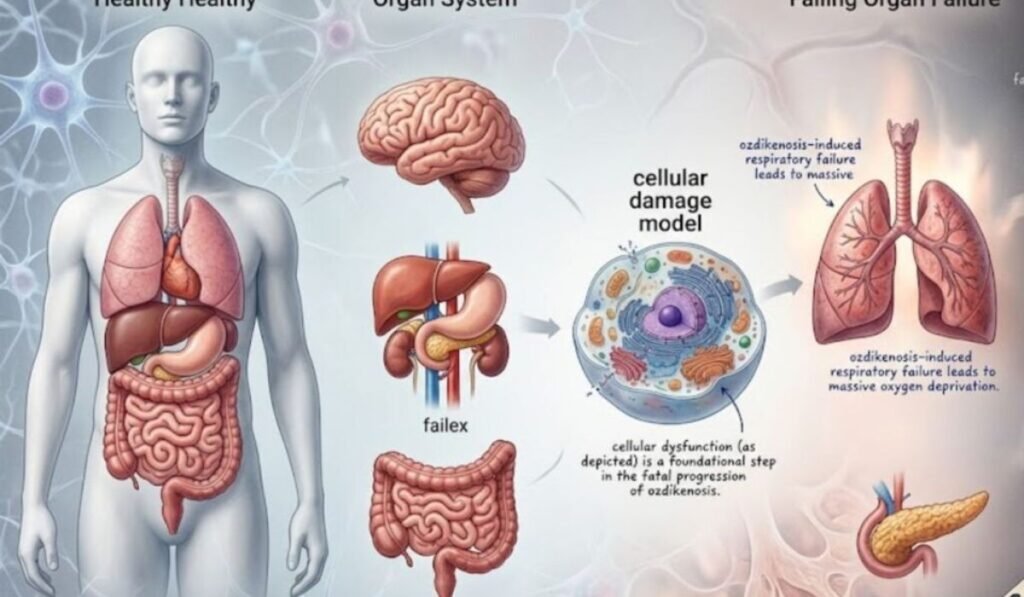
If Ozdikenosis were a real rare condition, which currently has absolutely zero verified support, it would theoretically cause harm through established biological pathways. Things like organ failure, cellular damage, and neurological deterioration are how real diseases cause serious, documented harm.
But applying these real mechanisms to an unverified term is exactly how health misinformation gains false credibility. Descriptions of cellular metabolism disruption or immune response collapse sound terrifying precisely because they mirror real dangers, even when attached to something completely unconfirmed by clinical evidence.
- Real fatal diseases follow clear, documented biological pathways
- Cardiovascular function and respiratory function failures are well-studied
- Unverified conditions borrow real language to seem legitimate
- No diagnosis, treatment plan, or proper care exists for this term
- Early detection is meaningless without a classified, real condition
Verified medicine saves lives because it names things accurately and backs every claim with clinical trial data. Vague online claims about Ozdikenosis meet none of these standards whatsoever.
Symptoms Commonly Misattributed to Ozdikenosis
Chronic fatigue, persistent headaches, cognitive fog, unexplained pain, and digestive issues are all very real symptoms. But they belong to verified, well-documented conditions, not to Ozdikenosis. Mislabeling them delays the proper care people genuinely need.
These symptoms deserve serious professional evaluation, just within the correct medical framework. Conditions like fibromyalgia, thyroid disorders, anemia, IBS, migraine, hypertension, vitamin deficiency, depression, and autoimmune conditions are all documented causes a healthcare provider can properly assess and treat.
- Dizziness and lightheadedness often signal blood pressure issues or inner ear conditions
- Cognitive fog may indicate vitamin deficiency or sleep disorders
- Digestive issues could reflect food intolerance or inflammatory bowel disease
- Systemic unwellness always warrants licensed clinical evaluation
- Self-diagnosis via online forums can cause genuine, lasting harm
| Symptom Reported | Verified Possible Cause |
| Chronic fatigue | Thyroid disorders, anemia |
| Persistent headaches | Migraine, hypertension |
| Cognitive fog | Vitamin deficiency, depression |
| Unexplained pain | Fibromyalgia, autoimmune conditions |
| Digestive issues | IBS, food intolerance |
| Dizziness | Blood pressure issues, inner ear conditions |
Symptoms are real. The label Ozdikenosis attached to them is not verified by any medical literature. Seek a proper clinical diagnosis before accepting any online explanation.
Misdiagnosis and Online Confusion
Cyberchondria is a well-documented phenomenon where health anxiety gets dangerously amplified by unsupervised online searching. When people encounter Ozdikenosis in health searches, pattern recognition kicks in, making unverified explanations feel personally meaningful and strangely credible.
Algorithm amplification makes this significantly worse. Online communities, health groups, and online forums reinforce shared beliefs without any medical scrutiny. A person experiencing systemic unwellness may invest deeply in an unverified label, delaying real clinical diagnosis and treatment that could genuinely help them recover.
- Community reinforcement within health groups deepens false belief over time
- Social proof makes widely shared misinformation feel legitimate
- Narrative coherence — a story that fits — feels more convincing than complex medical truth
- Self-diagnosis based on digital health discussions is never a substitute for clinical evaluation
- Misdiagnosis through online content can delay life-saving treatment
Medical scrutiny from licensed professionals protects you in ways that no online forum or social media thread ever can. Always prioritize a proper healthcare provider consultation over anything found through search engines.
How Serious Diseases Actually Cause Death
Real life-threatening conditions kill through specific, well-understood biological pathways. Heart attack, stroke, and heart failure cut blood supply to critical tissues. Sepsis and meningitis trigger catastrophic immune response failures. COPD, pneumonia, and pulmonary embolism devastate respiratory function rapidly.
Conditions like ALS, brain tumors, and Parkinson’s disease cause progressive neurological deterioration. Liver failure, kidney failure, and diabetes complications lead to dangerous toxin buildup and collapse of metabolic processes. Cancer destroys functional tissue through uncontrolled abnormal cellular damage with documented mortality statistics.
- Cardiovascular conditions cut oxygen deprivation to vital tissues
- Systemic infection like sepsis causes immune response collapse
- Respiratory diseases like COPD destroy breathing capacity progressively
- Metabolic disorders from kidney failure cause dangerous toxin buildup
- All real conditions have verified complications and mortality statistics
| Cause of Death | Example Conditions | Mechanism |
| Cardiovascular | Heart attack, stroke | Blood supply cut off |
| Respiratory | COPD, pulmonary embolism | Oxygen deprivation |
| Systemic infection | Sepsis, meningitis | Immune response collapse |
| Neurological | ALS, brain tumors | Neurological deterioration |
| Metabolic | Liver failure, kidney failure | Toxin buildup |
| Malignant | Cancer | Abnormal cellular damage |
Every real fatal condition has documented clinical evidence. Verified medicine tracks, studies, and treats these conditions rigorously because accurate naming genuinely saves lives.
Importance of Using Trusted Medical Sources
National health authorities, academic medical centers, and professional medical organizations exist to give people accurate, verified health information. These sources operate under rigorous accountability that no online communities or anonymous online forums can ever replicate or match.
When medical advice comes from licensed professionals with access to your full history, outcomes improve dramatically. Use peer-reviewed research, clinical databases, and medical journals as your foundation, not social media posts, unverified digital health discussions, or fear-driven websites chasing clicks.
- Licensed professionals provide the highest level of trustworthy healthcare guidance
- Peer-reviewed medical literature is the gold standard for health facts
- Academic medical centers offer reliable patient education resources
- General health content websites work only for basic background reading
- Social media and online forums should never guide medical diagnosis
| Source Type | Trust Level | Best Use |
| Licensed professionals | ⭐⭐⭐⭐⭐ | Personal diagnosis and treatment |
| National health authorities | ⭐⭐⭐⭐⭐ | General healthcare guidance |
| Peer-reviewed research | ⭐⭐⭐⭐⭐ | Condition-specific facts |
| Academic medical centers | ⭐⭐⭐⭐ | Patient education |
| General health websites | ⭐⭐⭐ | Background reading only |
| Social media / forums | ⭐ | Never for diagnosis |
If a term does not appear in medical textbooks or ICD-11, treat that as critically important information. Early detection of real conditions depends entirely on seeking qualified medical advice from the right people promptly.
Read Also This: pixelspinx com: What You Can Expect From This Site
The Role of Misinformation in Health Searches
Health misinformation is not new, but algorithm amplification has given it genuinely dangerous reach. Fear-based content spreads faster than calm, accurate health information every single time. Unverified terms like Ozdikenosis exploit this dynamic, gaining search traction that far exceeds any real medical legitimacy.
Deliberate misinformation, community invention, and AI-generated content all contribute to a landscape where false health content feels as credible as real clinical findings. Developing strong filters, verifying sources, and bringing concerns directly to licensed professionals remain the most effective defenses available to any patient today.
- False specificity makes fake details seem thoroughly researched and trustworthy
- Social proof incorrectly signals that popularity equals accuracy in health topics
- Fact-checking is consistently slower than the speed of viral health claims
- Cyberchondria is a recognized pattern that amplifies, not reduces, health fear
- Qualified medical advice always beats anything found through online searching
| Misinformation Factor | How It Works | How to Counter It |
| Fear-based content | Alarm spreads fast | Pause and verify first |
| False specificity | Fake details seem researched | Demand peer-reviewed research |
| Social proof | Popularity signals credibility | Popularity ≠ accuracy |
| Algorithm amplification | Engaging content gets pushed | Seek information actively |
| Community reinforcement | Groups reinforce shared beliefs | Seek outside perspectives |
Bringing your fears to a healthcare provider is always the most productive and safest next step anyone can take.
Frequently Asked Questions
What Makes This Illness So Dangerous?
Many people search health topics online every day. Ozdikenosis Kill becomes a concern when symptoms stay untreated for too long.
Can This Condition Become Life Threatening?
Doctors say some rare illnesses can affect the body fast. Ozdikenosis Kill discussions often mention serious breathing and organ problems.
Why Do People Fear This Rare Disease?
People worry because little public information exists online today. Ozdikenosis Kill topics spread quickly across health forums and blogs.
How Fast Can Symptoms Get Worse?
Some patients report weakness, pain, and sudden body changes early. Ozdikenosis Kill concerns grow when medical care gets delayed for days.
Is There Any Treatment Available Right Now?
Treatment usually depends on symptoms and overall patient condition first. Ozdikenosis Kill cases may require quick hospital support and monitoring.
What Warning Signs Should People Notice Early?
High fever, fatigue, and breathing trouble should never be ignored. Ozdikenosis Kill searches often increase after unusual health symptoms appear.
Can Early Diagnosis Improve Survival Chances?
Early testing helps doctors manage dangerous conditions much more effectively. Ozdikenosis Kill risks may be reduced when patients receive fast medical attention.
Conclusion
Ozdikenosis is not a verified rare condition supported by any peer-reviewed medical literature, clinical data, or recognized diagnostic classification systems. It exists in online health discussions but holds no place in medical journals, ICD-11, or any credible medical education setting worldwide. Real symptoms deserve real answers from real professionals.
If you are experiencing chronic fatigue, cognitive fog, systemic unwellness, or any other persistent symptoms, please consult a qualified healthcare provider immediately. Do not let unverified terms from social media or online forums delay your path to genuine care. Verified medicine and licensed professionals are your strongest, most reliable allies in protecting your long-term health.
